
Mobility as a Service: This is how the future of mobility looks like
According to forecasts, 70 percent of all people will live in cities by 2050. Therefore, it will become ever more important to do without owning our cars in the future. But what could be an alternative to owning a car? Mobility as a Service, or MaaS for short. In this article, you will find out what is behind the term MaaS, why environmental and transport experts have such high hopes for it, and how MaaS could contribute to a better quality of life in cities. We will also introduce you to some platforms that already offer innovative mobility services
Inhalt
- What is Mobility as a Service? – A definition
- Flexible, convenient, environmentally friendly – the most important advantages of MaaS
- From 0 to 3 – the MaaS integration levels
- The status quo – this is how far we have come on the way to Mobility as a Service
- From tracking to new business services – examples of modern mobility services providers
- Cooperations – regional MaaS providers are the first stage
- Future outlook
About Mobility as a Service in a nutshell
- Mobility as a Service (MaaS) means that various mobility services like e-bikes, cargo bikes, scooters, etc.) can be booked and paid via a platform. Ideally, customers have a subscription and pay via a flat rate.
- The advantages of MaaS include a high degree of flexibility, environmental friendliness and ease of use. In the long term, Mobility as a Service can help to reduce the number of cars on the road in cities.
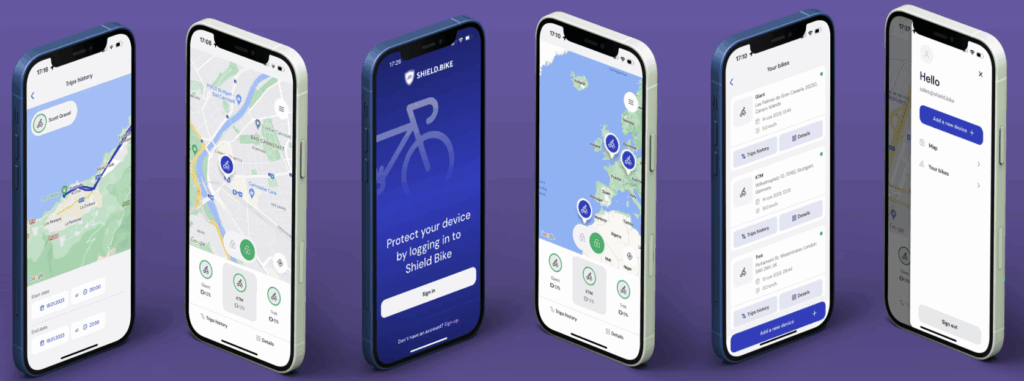
- E-mobility and tracking solutions are important components of MaaS. With the BikeTrax GPS tracker and the PowUnity platform for fleet management, fleet operators can manage their e-bike fleets digitally.
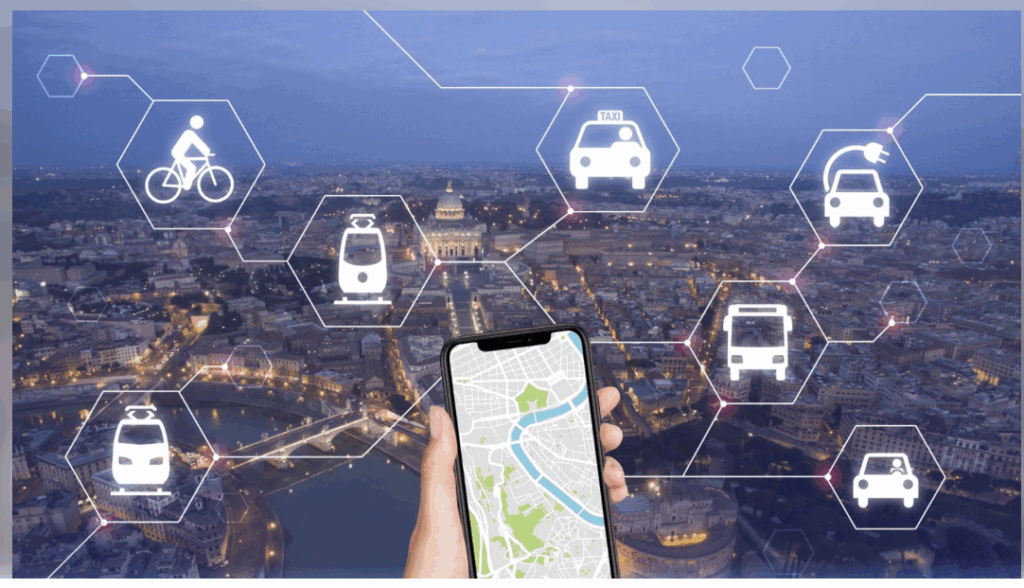
Mobility as a Service (MaaS) makes it possible: owning a car will become unnecessary in the city of the future. You will be able to book an e-scooter, a car-sharing, or a cargo bike on the next street corner, all via one app. And you will not need to worry about the payment because you will have a flat rate.
While it might sound futuristic at first, the truth is that MaaS is no longer just a dream of the future. There are more and more platforms that link together different transport services and offer MaaS on a small scale in many European countries. But how exactly does MaaS work, why is it so revolutionary and how could it change the way we get around the cities in the next few years?
What is Mobility as a Service? – A definition
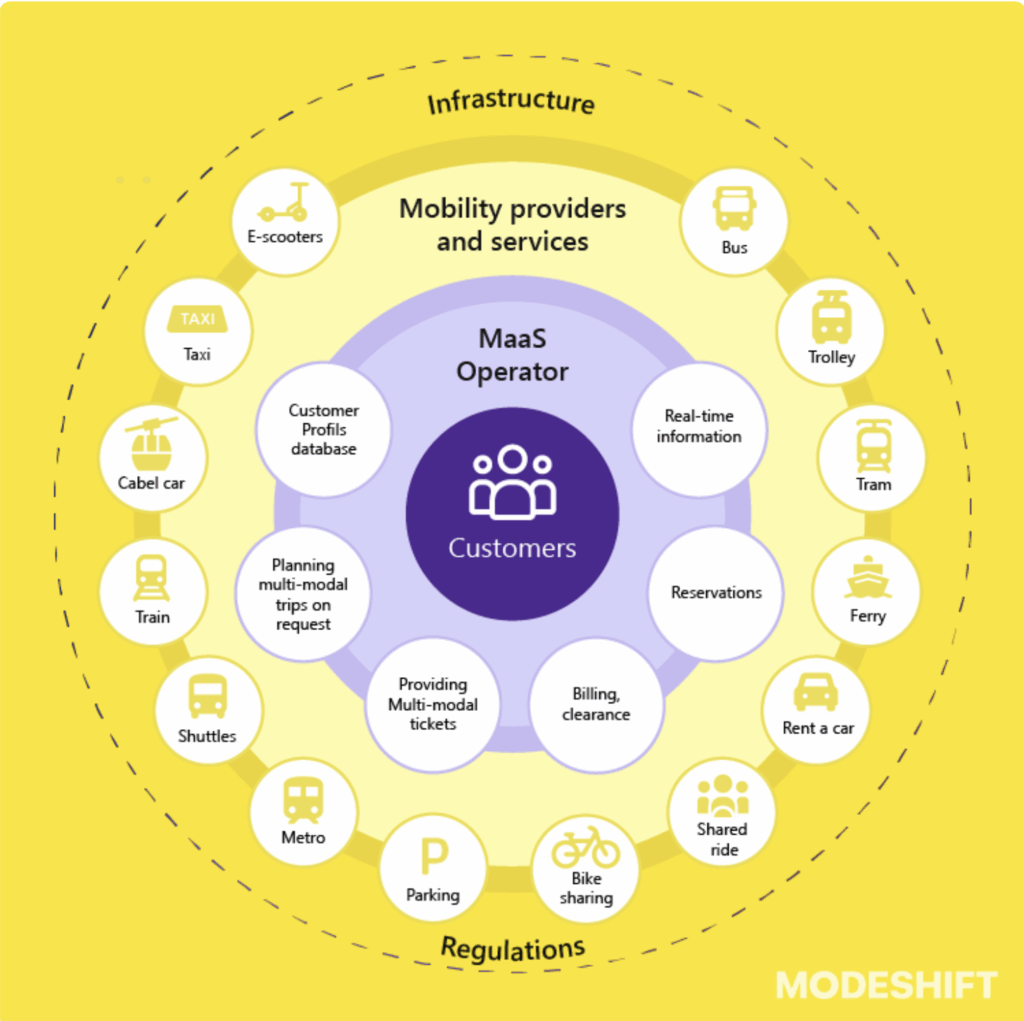
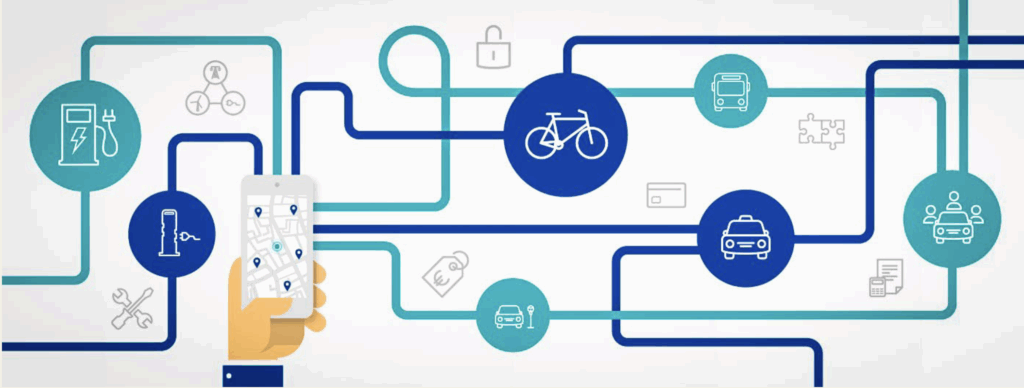
Mobility as a Service means that various transport services, from car- and bike-sharing to public transport and taxis, are bundled together in a single platform. Via this platform, you have the possibility to book the means of transport of your choice. Ideally, you pay according to the travel distance or choose a subscription that suits your needs. This means that in the end, it doesn’t matter which means of transport you use for your trip because, like with mobile phone service, you will have a flat rate.
A typical working day could then look like this:
You are too late in the morning to take the underground to the office. No problem, there’s an e-scooter waiting for you on the next street corner. You simply need to activate it via your app and drive off. For a meeting on the other side of town, you book a car-sharing and for the way home at the end of the day, you take the underground- this time in a relaxed manner. And on your way home, you reserve an e-cargo bike for your weekend visit to a DIY store.
Does that sound promising? In fact, MaaS has the potential to fundamentally change our view on transport services, while having a positive impact on our environment.
- Übrigens: Note: Mobility as a Service should not be confused with Mobility on Demand. The latter refers, for example, to shared taxis or similar services that run on demand and usually pick up several passengers at once.
Flexible, convenient, environmentally friendly – the most important advantages of MaaS
Mobility as a Service has several advantages for you as a user as well as for the environment and the quality of life in cities:
High flexibility: At any given moment, you can use the means of transport that is best suited to your purposes and is located nearby. This means that you are flexible and can reach your destination using the shortest route.
More overview: Do you often lose track of the many different forms of transport in your city? That will be a thing of the past once you can find them all on one central platform. No more jumping from one app to another. Multimodal MaaS platforms can also tell you right away how long it takes you to get to your destination by the different forms of transport.
Easy planning and payment: MaaS platforms make route planning easier. In addition, you no longer have to pay for each trip and each means of transport individually. With a subscription, you will know what you pay each month, regardless of the mobility service you use.
Fewer cars in cities: Experts believe that MaaS can help reduce the number of private cars in cities. This has a positive impact on reducing air pollution and traffic jams and makes an important contribution to the fight against climate change.
More space: Fewer cars require less parking space. If more people use e-bikes and e-scooters, opportunities to make cities greener, quieter and more liveable emerge. In turn, the quality of life could increase for all residents.
MaaS platforms also bring great advantages for providers of transport services. They can make their offerings more attractive by networking with others and they can also reduce their administrative burden. The prerequisite for this is successful cooperation – we will come back to this topic later.
From 0 to 3 – the MaaS integration levels
According to ITS India, platforms for mobility services can be divided into four different integration levels, so-called MaaS miA-Readiness-Levels:
- Level 0: Separate offers: You can book individual offers on a separate website or in a separate app. Those offers are not interconnected.
- Level 1: Integration of information You receive information about different mobility offers on one platform. For example, you can look up timetables for the underground, buses and trains and plan routes with different means of transport. If you want to book your journeys, however, you have to do this via the respective provider. A well-known example of service at this integration level is Google Maps. ITS India also distinguishes between sub-levels 1a and 1b. While level 1a includes information only about public transport, level 1b also integrates private mobility services such as car-sharing.
- Level 2: Integration of tickets At this level, you can plan, book and pay for a journey with different means of transport on one platform. This is made possible, for example, by the Metro service & Indian Railway.
- Level 3: Packages and flat rates: Platforms at the highest level allow you to have flat rates or subscriptions for different means of transport. You can then freely choose an e-bike, an e-scooter or a car-sharing as part of your subscription. This translates into a full overview and transparent costs. A pioneer in this area is the Finnish service Whim.
The status quo – this is how far we have come on the way to Mobility as a Service
Transportation in countries like India is still dominated by private cars and separate platforms for a car- or bike-sharing, ride services like Uber or public transport. But thanks to technical innovations, such as e-mobility or GPS trackers, the development of innovative mobility services has accelerated in recent years.
Sharing services are shaking up the market
The first car-sharing service already existed in India . However, the principle of STATTAUTO at that time differed significantly from modern car-sharing options. After all, there were only seven vehicles at three locations and anyone who wanted to book one of them usually had to do so days in advance and via a landline, of course.
Today, there are 2028 car-sharing providers in India, offering their customers over 26,000 vehicles. Whether station-based or free-floating, offered by large automobile companies or start-ups, the choice is large. And booking is no longer done via telephone but via the Internet and designated apps. Moreover, sharing services are no longer limited to cars. E-scooters and e-bikes are becoming increasingly important in inner-city areas. With both, there is no need to search for a parking space and you are no longer stuck in traffic jams during rush hour. If you rent a cargo bike, you can even benefit from these advantages when transporting bulky items.

Get Started Now
Our architects and consultants can assist your organization in tailoring the perfect solution for all your business requirements. You can reach out to us for more information on how we can help.
For more updates and details visit our Social Media Profile!